Immersive storytelling in VR transforms gameplay, pulling players into fully interactive worlds for unforgettable Sandbox VR experiences.

How VR Uses Immersive Storytelling to Transform Gameplay
Have you ever watched a movie and wondered what you would do if you were in the characters' place? Have you imagined yourself as part of the narrative?
With an immersive virtual reality experience, you don’t have to imagine. Sandbox VR immersive storytelling VR adventures put you inside immersive worlds, where you’re the hero of the story.
Table of Contents
What Is Immersive Storytelling In VR?
How Does VR Storytelling Enhance Engagement?
What Storytelling Techniques Make VR Experiences Stand Out?
How Does Social Interaction Amplify Immersion?
Can VR Transform Emotional Storytelling?
What Makes Sandbox VR Experiences Different From Home VR?
How Do Developers Create Immersive VR Experiences?
What Future Innovations Could Shape VR Storytelling?
What Is Immersive Storytelling in VR?
Immersive storytelling is an evolved form of traditional narrative. Instead of watching characters on a screen or reading about their adventures, you step directly into the story as the protagonist inside a fully realized virtual world. The immersive narrative responds to your movements, decisions, and interactions in real time, making you an active participant rather than a passive observer.
Stories feel more profound in virtual reality because the medium engages multiple senses simultaneously. When you turn your head, the digital world moves with you. When your physical body reaches out, you can touch and manipulate objects. When your physical body moves in the physical space, so does your digital avatar’s body in the virtual space on screen. Your haptic vest provides tactile feedback that places you inside the action. With this level of sensory richness, the story feels real in a way traditional media doesn’t (and can’t).
At Sandbox VR, we offer cinematic experiences in diverse genres. In a zombie survival scenario, you’re not watching heroes fight the undead; you’re barricading doors, coordinating with teammates, and making split-second decisions to keep everyone alive. Space exploration missions put you on the bridge of a starship, navigating your ship while combating enemy fire. Fantasy adventures put you in the shoes of a warrior or mage, wielding weapons and casting spells with your own hands.
Key elements that make a story immersive include:
Physical presence within the story via realistic visuals
Agency to make meaningful choices that affect outcomes
Multi-sensory feedback that reinforces the VR experience
Emotional stakes that create genuine investment in the story’s outcome
Spatial audio that makes sounds come at you from all directions
The Role of the Player in the Story
VR experiences redefine the relationship between audience and narrative by putting you, the player, at the center of an interactive story through fully interactive experiences. You’re no longer a spectator watching events unfold; you’re the decision-maker whose actions drive the plot forward. This transformation from passive consumption to active participation creates inevitable and unprecedented emotional engagement between you and the story.
Traditional storytelling is about watching what happens next, but immersive storytelling in VR is about the decisions you make and how they influence the story’s direction. The distinction changes how we process the story as it unfolds. When you encounter danger, your body responds by producing real adrenaline, and triumph feels personal because you earned it through your actions and decisions. Between this authentic emotional engagement and player agency, every VR experience feels unique, consequential, and meaningful.
How Does VR Storytelling Enhance Engagement?
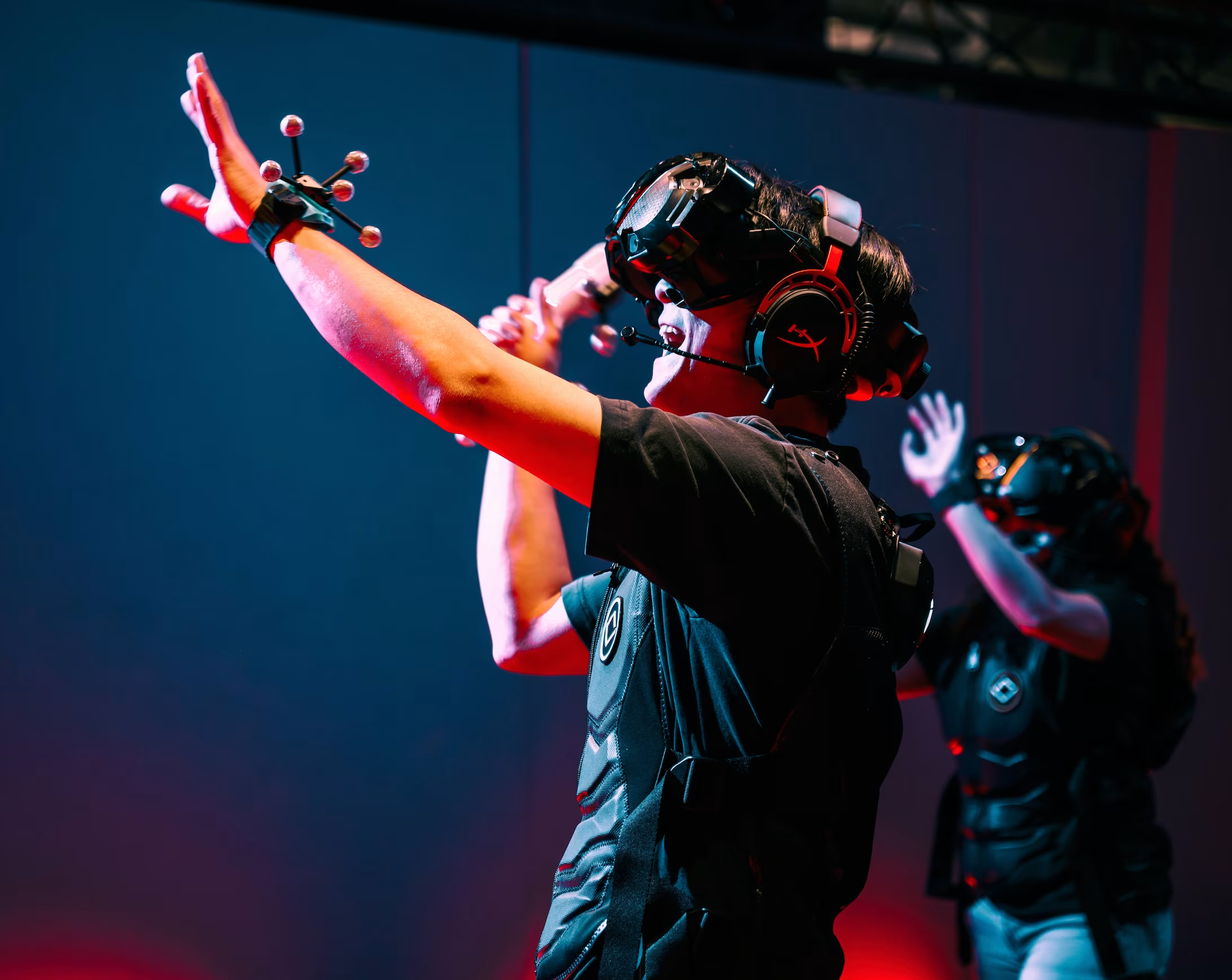
In a VR adventure, interactive elements and digital elements deepen immersion by turning your entire body into the controller. Natural movements, like ducking behind cover during an invasion or using hand gestures to communicate with teammates on a stealth mission, become part of how the story unfolds.
Sandbox VR uses several technologies combined to heighten player immersion and involvement:
Motion capture technology tracks your movements with remarkable precision and translates them into the virtual world in real time. When you high-five a teammate, both of you see and feel the interaction.
Haptic feedback adds another dimension. A specialized haptic vest allows you to feel the recoil of weapons, the vibration of machinery, or the impact of footsteps.
Spatial audio positions sounds in three-dimensional space. You’ll hear footsteps approach from behind, explosions boom from specific directions, and teammates’ voices come from their actual positions, both in the real world and the virtual one.
This level of sensory alignment helps your sense of presence, the feeling of truly being inside the virtual environment. The science behind presence itself explains how these technological elements make the experience feel real. When sensory inputs, what you see, what you hear, and what you feel, consistently align, your brain stops questioning the reality of the experience, so you focus entirely on the story and the challenges at hand, not the technology making it all happen.
By combining these elements in purpose-built environments, Sandbox VR creates multi-sensory social engagement. As you and your team move through the virtual world, full-body tracking captures subtle movements, and environmental effects add wind and temperature changes, resulting in immersion so complete that you might even forget you’re wearing a headset.
What Storytelling Techniques Make VR Experiences Stand Out?
Remember “choose your own adventure” books? We take that mechanism to the next level. With branching narratives, your meaningful choices affect the outcome of your VR experience. Will you take the stealthy approach or charge in with weapons blazing? Do you trust the mysterious ally, or should you investigate their motives? Each decision opens a different path, ensuring no two experiences play out the same.
Our environmental storytelling uses scenery, objects, and interactive props to tell part of the story without explicit exposition. A blood-stained laboratory tells you something went wrong, scattered personal effects reveal character histories, or interactive terminals provide optional backstory for the curious. It’s a layered approach that rewards attention to detail while allowing action-focused players to keep moving.
Another element that heightens the realism is AI-driven non-player character (NPC) interactions, which create dynamic conversations and reactions. The immersion deepens as these NPCs respond to your proximity, tone, and choices. When they remember your previous actions or comment on your equipment choices, the story gains continuity and depth.
The most effective VR experiences combine traditional narrative arcs with immersive mechanics. Classic storytelling techniques like rising action, climax, and resolution give the story structure, while VR-specific mechanics like gestural interactions and spatial puzzles make those story beats feel earned through personal effort instead of just scripted cutscenes.
Using Interactive Elements To Drive the Narrative
Puzzles, combat, and exploration shake up your experience, but more importantly, they reinforce story progression through active participation. Solving a puzzle to unlock a door becomes a narrative beat in which your problem-solving skills advance the plot of the story. Combat sequences create tension and stakes that make all of your subsequent choices more impactful.
In a space-themed Sandbox VR experience, operating ship controls isn’t just pressing buttons and pulling levers. It’s manning the weapons station while your crew takes down a stowaway alien. In a fantasy quest, combining spells with teammates might unlock an entirely new narrative branch. Your coordinated actions become memorable moments, and every interaction affects the outcome directly.
How Does Social Interaction Amplify Immersion?
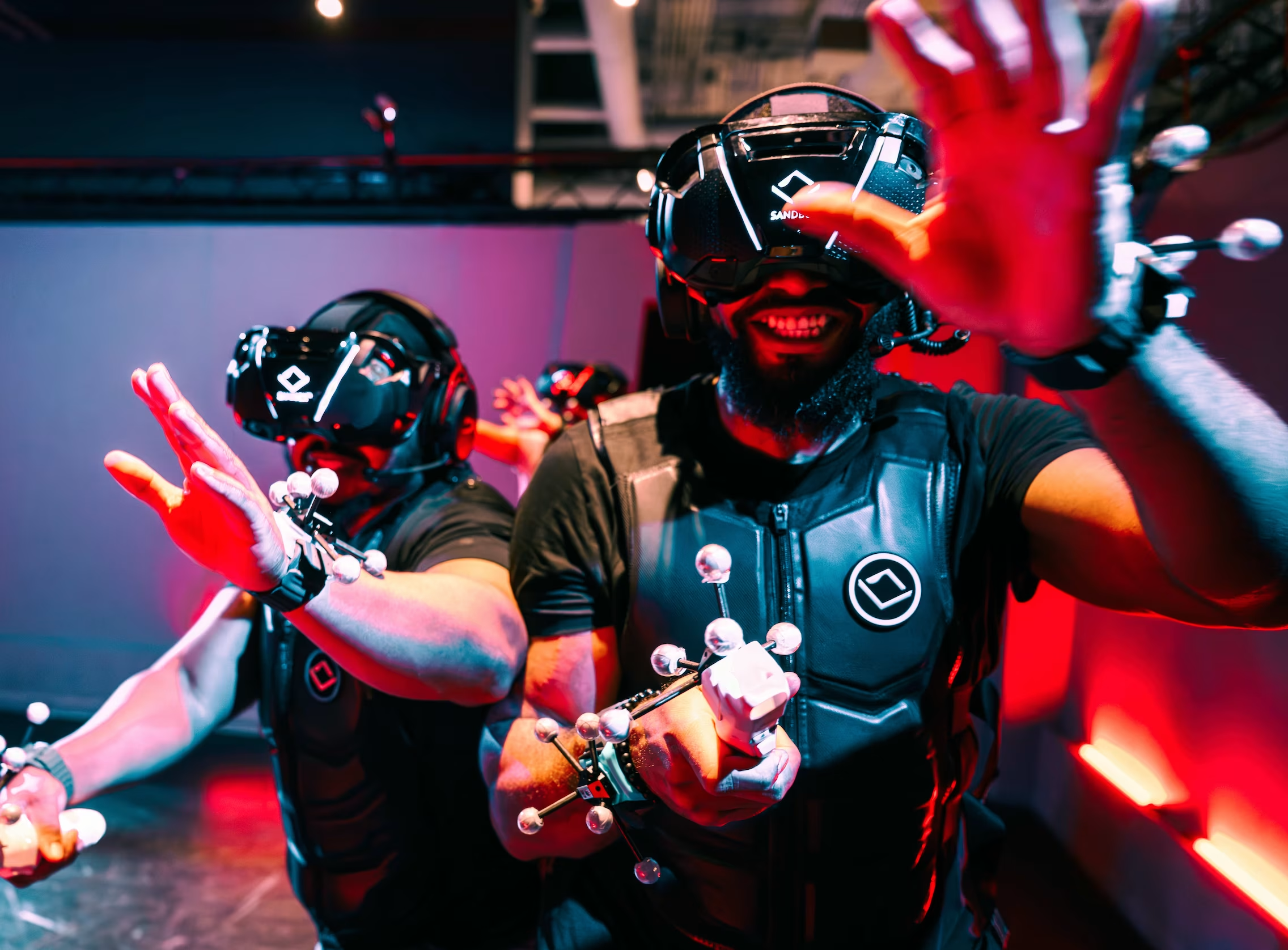
It’s not just you inside the experience; it's your entire team, relying on one another to move the story forward.
Team-based experiences give immersive storytelling a uniquely powerful layer: other real people, your friends, your family members, your coworkers, sharing your adventure. Unlike solo VR, in which AI companions follow tightly scripted behaviors, your real-life companions bring unpredictability, humor, and genuine emotional reactions that no algorithm can replicate.
Your story unfolds as you see, hear, and interact with your teammates in real time. When you see your friend’s avatar diving for cover or celebrating a victory, your social connection bridges the gap between the virtual world and the real one. Just like you would in real life, you communicate through natural gestures, coordinate through eye contact and pointing, and experience emotional moments together.
Collaborative storytelling opportunities are impossible in single-player experiences, unlike the shared decision-making required in immersive VR. Your group debates strategies, divides responsibilities, and has each other’s backs through challenges, and these negotiations become part of the narrative itself as your team’s dynamics and coordination lay the path forward.
Social presence, or simply being there together, dramatically heightens the emotional stakes. Protecting your teammates becomes personally meaningful, and failing a challenge disappoints real people who were counting on you. With this kind of social accountability and shared investment, the adventure resonates far more powerfully than isolated experiences.
Can VR Transform Emotional Storytelling?
An immersive VR experience doesn’t just tell you a story is scary or exciting — you feel it in your very bones. When you’re trapped in a dark hallway with something unseen shuffling toward you, that’s not the same low-stakes fear you’d feel watching a movie; that’s real, heart-pounding, jumping-out-of-your skin terror. Your brain knows you’re safe, but your body reacts instinctually.
We’ll use a Sandbox VR zombie apocalypse experience as an example. You hear the groans and growls behind the door of an abandoned building before you see them, and your heart starts to pound. When you throw open the door and the shambling, decaying figures begin spilling out, you and your friends are suddenly amid a zombie horde, swinging weapons with your actual arms. Thanks to environmental storytelling, spatial audio, and haptic feedback, you’re not watching someone else’s nightmare anymore; you’re living it.
But don’t worry, it’s not all terror and panic. Our adventures take you on an emotional rollercoaster because your whole body is involved in the action. Your adrenaline spikes as you race through a crumbling castle with debris falling around you, or your hands tremble during an intense firefight. Your body’s physiological responses to the emotions the story evokes are the reason these memories leave lasting impressions.
What Makes Sandbox VR Experiences Different From Home VR?
Solo home VR setups are cool, but they have limits. You’re usually in your living room, tethered to a computer, trying to remember how far you can walk before you bark your shin on the coffee table. It’s a limited space, and you’re probably the only one playing.
Location-based immersive experiences like Sandbox VR are an entirely different world (pun intended). In our room-scale environments, you can walk, run, and explore virtual worlds without worrying about where walls, furniture, or the dog are.
As for tracking, home systems follow your headset and hand controllers, but that’s all. Sandbox VR tracks your entire body. Multi-sensory feedback is another way our experiences differ from home-based VR systems. At Sandbox VR, haptic vests and other ambient techniques make you feel like you’re really there.
The real difference, though, is that you’re sharing this immersive story with friends occupying the same space, experiencing the same adventure, and creating memories together.
Key Differentiators
Purpose-built holodecks for VR storytelling
Advanced haptic systems for directional and environmental feedback
Social presence with friends physically next to you
Professional-grade equipment for superior visual and audio fidelity
How Do Developers Create Immersive VR Experiences?
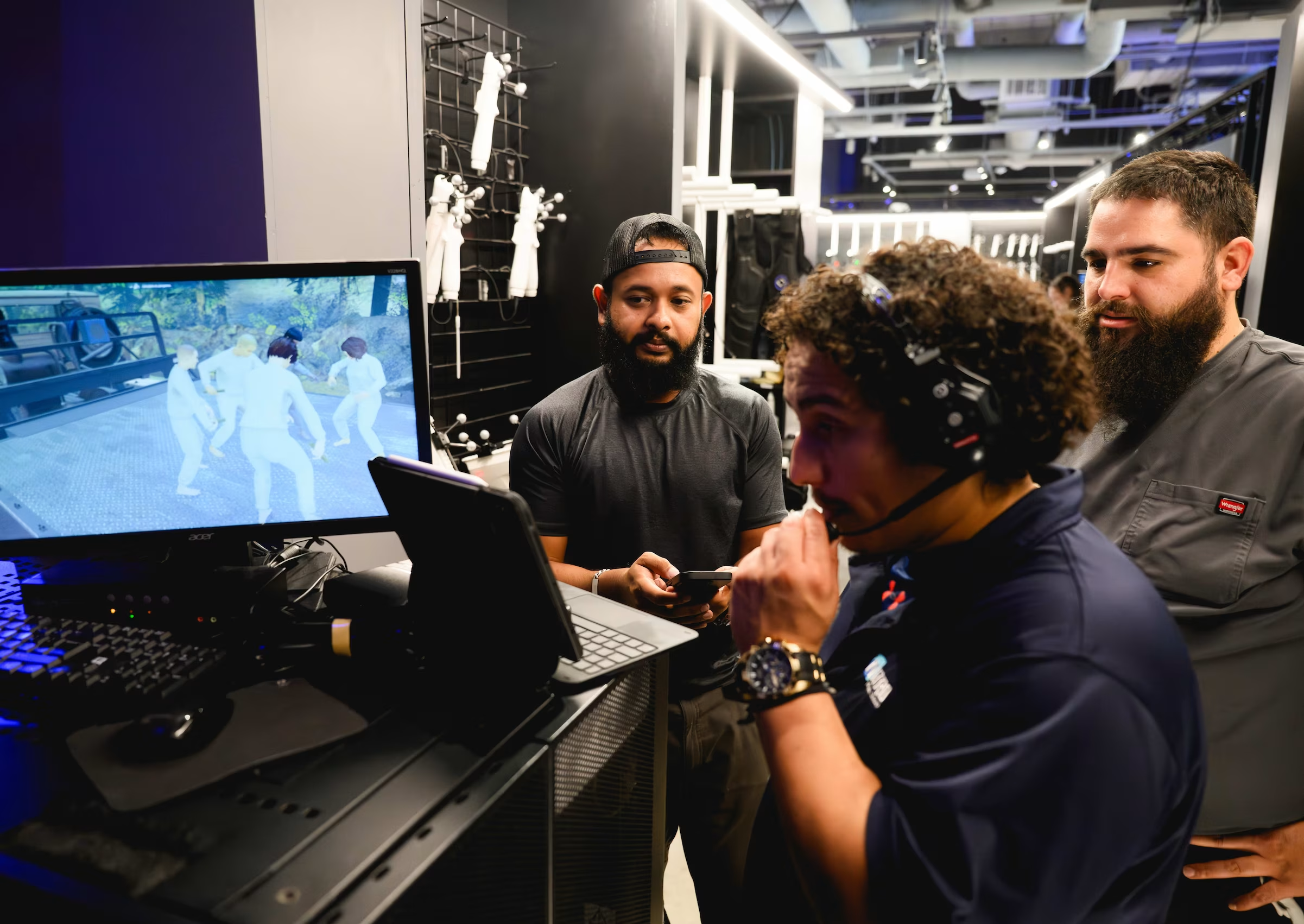
Storytellers, designers, and engineers join forces to create our immersive experiences, aiming for just the right balance between narrative and interactivity. They combine:
High-fidelity 3D environments
Realistic physics and interaction
Spatial audio
Motion capture
Haptic feedback
VR engines bring their visions to life. Our approach to creating experiences emphasizes social, action-driven stories in which teamwork is essential.
Designing for Replayability
Because each adventure has many interactive elements and multiple possible outcomes, our experiences make people want to come back for more. Returning players will always find something they didn’t notice last time, and a different choice at one point can open up an entirely different story branch, giving returning players subtle narrative changes that can change the story’s ending.
What Future Innovations Could Shape VR Storytelling?
Here’s what we predict:
AI-driven narratives will create adaptive experiences that take shape based on player behavior and biometric feedback.
Advanced haptics will simulate texture, temperature, and even smell with remarkable precision.
Augmented and mixed-reality integration will continue to blur the boundaries between virtual adventures and physical locations.
As for Sandbox VR, we plan to continue evolving immersive experiences, focusing on creating shared adventures that become your lasting memories.
Immerse Yourself in the Narrative
Immersive storytelling VR turns passive observers into active participants through multi-sensory engagement, social interaction, and meaningful choices. Our adventures guide you through immersive journey's, helping you form emotional connections and memories in a way traditional media can’t. To experience it for yourself, book your immersive VR adventure today.
FAQs
Is immersive storytelling only possible in VR?
No, but VR heightens immersion by engaging multiple senses.
Can VR experiences be suitable for all ages?
Yes, Sandbox VR offers experiences designed for teens and adults with varied intensity levels.
Do players need prior VR experience to enjoy immersive storytelling?
No, experiences are designed to be intuitive and accessible for beginners.
Are Sandbox VR experiences single-player or social?
They are primarily social, designed for groups to interact in the story together.
Will VR experiences replace traditional games?
No, they complement traditional media but offer unique full-body, interactive immersion.
Other Articles

Dynamic Gameplay Experience Guide
Dynamic gameplay experience explained in a clear, simple way. Learn how DGE videos work and how they elevate every Sandbox VR adventure.

Inverse Kinematics Explained
Inverse kinematics brings realism to VR. Discover how Sandbox VR uses it to create lifelike motion and physical sensations in virtual experiences.
